Archive for March, 2026

Different Types of OOH (and When to Use Them)

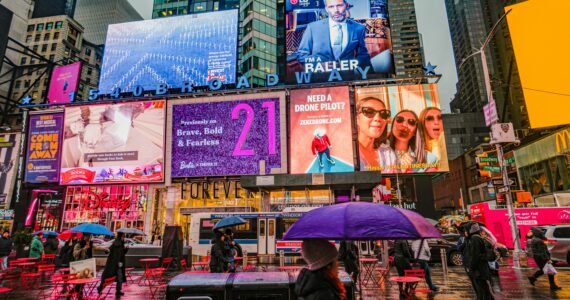
Out-of-home (OOH) advertising is often discussed as a single channel, but the reality is that it’s a diverse ecosystem of formats, environments, and strategic use cases.

From traditional bulletins to digital displays, each type of OOH format serves a different purpose within the media mix. Understanding when and why to deploy a specific format is essential for maximizing ROI and aligning with campaign objectives.

Here’s a breakdown of the primary OOH formats and when they perform best.

1. Traditional Billboards (Static)

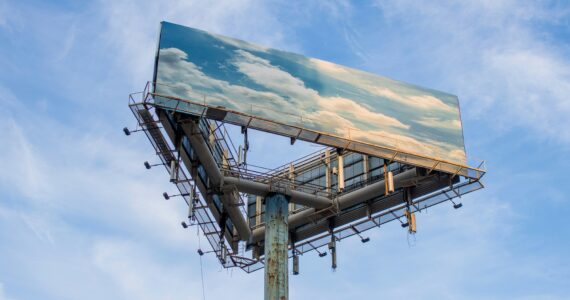
Traditional billboards remain one of the most recognizable and relevant forms of OOH. Positioned along highways and high-traffic corridors, they deliver consistent, repeated exposure.

They are particularly effective for:

  • Regional or national brand campaigns
  • Law firms, healthcare providers, and automotive companies
  • Market entry or competitive takeovers
  • Long-term brand visibility

Static billboards offer uninterrupted visibility and are ideal when consistency and repetition are key.

2. Digital Billboards (DOOH)

Digital out-of-home allows advertisers to rotate creative and update their content dynamically, anytime of day.

Strategic uses include:

  • Product launches
  • Event-driven promotions
  • Time-of-day targeting
  • Campaigns requiring rapid updates

Digital billboards offer creative flexibility while maintaining the scale and visibility of traditional OOH.

3. Transit Advertising

Transit advertising includes bus wraps, train ads, subway placements, and station signage.

Transit formats are ideal for:

  • Urban-focused campaigns
  • Younger or commuter-heavy demographics
  • Entertainment and retail brands
  • High-repeat exposure in dense markets

Because transit ads move through cities, they extend each beyond a single area.

And So Many More

There are countless types of OOH formats. We’ve covered only three, and yet, there’s airport ads, event-based OOH, and various types of street furniture.

OOH is multi-dimensional and varied in its format capabilities and use. It’s versatile, scalable,e and an increasingly measurable channel that supports brand building and high-performance outcomes.

In 2026, the question is no longer whether to include OOH; it’s how to intelligently incorporate it in an advertiser’s media mix.


Why Agentic AI is Our North Star

For decades, the Out-of-Home (OOH) industry has been defined by its physical permanence. We talked about “steel in the ground” and “locations.” But as we move through 2026, the industry is hitting a flashpoint. 

At DOmedia, our North Star is clear: we are building toward an Agentic AI-enabled ecosystem that transforms OOH from a static marketplace into an intelligent, adaptive network.

The goal isn’t just to make buying billboards faster; it’s to make OOH as liquid, intelligent, and measurable as any digital channel on the planet. 

Here is how we are re-engineering the global media landscape.

From Buying “Postcode” to Buying “Pulse”

Historically, OOH has been a game of geography. You bought a ZIP code and hoped your audience walked by. 

DOmedia’s vision is to flip that script—with audience being first in mind. 

By integrating real-time mobility data with AI, we are evolving toward  “Liquid Audience Buying.” This is a future where brands can bid on a specific audience profile—say, “eco-conscious urban professionals”—rather than a specific street corner. AI will autonomously identify the highest concentration of that audience across our global network and execute the buy in milliseconds. Whether that audience is in Manhattan, London, or Singapore, the strategy remains unified. 

This shift from location buying to pulse buying is foundational to our roadmap.

The Power of Agentic Workflows

Automation is nothing new, but Agentic AI is a paradigm shift. 

Traditional automation follows a script; an AI Agent follows an intent.

In the future state we are building toward, when a buyer inputs a campaign brief into the DOmedia ecosystem, they aren’t just setting up a flight. They are deploying a digital strategist. 

These agents can:

  • Negotiate in real-time: Automatically optimizing bids based on supply and demand.
  • Counter-program: If a competitor launches a massive activation in a specific district, our AI can sense the shift in share-of-voice and autonomously adjust your campaign to protect your brand’s presence.

Creativity That Breathes

One of the greatest tragedies of OOH has been the “static” nature of the creative. Our intent is to make Dynamic Creative Optimization (DCO) the standard, not the exception.

Through AI, the future of OOH includes “Contextual Triggers” at scale. If it starts raining in Seattle, the creative on our screens shifts to promote umbrellas or rain gear instantly. If a local sports team wins, the congratulatory message is live before the fans leave the stadium.

Imagine this—a major fitness competition arriving in a city and suddenly every grocery store sees a rise in demand for eggs and protein. In a future state like this, contextual signals could trigger creative automatically across nearby screens. Instead of static campaigns, OOH becomes responsive to what is actually happening in the world around it.

The gap between digital agility and physical presence closes.

Closing the Loop: The End of “Guesswork”

For too long, OOH was viewed as a “top-of-funnel” awareness play with murky attribution. That era is over. 

By leveraging AI to synthesize mobile location data and retail transaction signals, OOH provides Omnichannel Parity.

Capability is endless and showing a direct line from a consumer seeing a digital billboard to them walking into a store or visiting a website 20 minutes later is just within reach. With this level of precision, OOH is allowed to sit at the center of the marketing mix, rather than the periphery.

The Global Horizon

This isn’t just a North American strategy. Our roadmap is built for a globalized economy. 

As sustainability becomes a core metric, our build towards AI is now factoring in Carbon Performance—prioritizing energy-efficient screens and helping our partners meet their Environmental, Social, and Governance (ESG) goals without sacrificing reach.

The “Home” in Out-of-Home is no longer just a place; it’s a global network of intelligent touchpoints. At DOmedia, we aren’t just building a platform; we are building the brain that powers the world’s most visible medium.


What Rising Ad Costs Mean for OOH in 2026

As we move deeper into 2026, one theme continues to dominate media planning conversations: rising advertising costs. From paid search and social to connected TV and programmatic display, cost inflation is forcing marketers to reevaluate efficiency, diversification, and long-term strategy.

In this environment, out-of-home (OOH) advertising is gaining renewed attention; and not simply as an awareness channel, but as a stabilizing anchor within the modern media mix.

Here’s what rising ad costs mean for OOH in 2026; and why the channel is increasingly relevant.

Digital Inflation Is Reshaping Media Allocation

Over the past several years, digital advertising has become more competitive and more expensive. Auction-based platforms drive CPMs higher as demand increases. 

For many brands, this means:

  • Higher acquisition costs
  • Reduced predictability
  • Increased volatility in campaign performance

As performance channels become more expensive, marketers are reassessing the balance between short-term conversions and long-term brand building.

OOH Offers Predictability

Unlike auction-drive platforms, traditional OOH inventory operates on negotiated rates and contracted placements. While pricing fluctuates by market and demand, it does not experience the same daily bidding unpredictability as digital channels.

This creates greater planning stability. With this, brands can:

  • Secured fixed placements
  • Forecast exposure with confidence
  • Lock in inventory ahead of peak seasons

In a year defined by cost pressure, predictability has strategic value.

Demand Pressure Is Extending to OOH

It’s important to note that rising ad costs do not exclude OOH entirely. As more brands diversify budgets into out-of-home, premium inventory, like digital OOH (DOOH), can experience increased demand.

This makes early planning even more important in 2026. Securing high-traffic locations, commuter corridors, event-aligned placements in advance allows brands to protect budget efficiency while maintaining visibility.

Platforms like DOmedia enables agencies and brands to compare inventory, manage RFPs, and streamline procurement; which becomes increasingly valuable when cost control is a priority.

Strategic Implications for 2026

Rising ad costs are not simply a budgeting challenge, they are a strategic signal.

In 2026, marketers who adapt will:

  • Balance performance and brand investment
  • Diversify beyond auction-driven channels
  • Secure premium inventory earlier
  • Leverage OOH as a stabilizing force

OOH’s ability to deliver visible, trusted, and scalable exposure positions it as an increasingly important pillar of modern media strategy.

2026 Is a Year of Growth & Transformation

As advertising costs continue to rise, brands are reevaluating where and how they invest. In this climate, OOH offers stability, scale, and brand-building power that complements an increasingly complex digital ecosystem.

The conversation is no longer “brand vs. performance.” It’s about building true brand strength to improve performance; something that OOH remains a central piece to.

For agencies and advertisers navigating cost pressure in 2026, the opportunity isn’t just to spend differently, it’s to plan smarter.